Technology plays a growing role in education, careers, and everyday life. Therefore, many parents are exploring kids coding classes for their children.
Coding teaches children how to create with technology instead of simply consuming it. Moreover, coding lessons can make learning practical, creative, and exciting.
But what actually happens inside a coding class?
Children may start with games and visual programming. Later, they can build animations, websites, applications, and simple games.
This guide explains what kids learn in coding classes, how lessons work, and what children can build.
What Is a Kids Coding Class?
A kids coding class introduces children to computer programming through age-appropriate activities. Lessons usually combine instruction, practice, challenges, and projects.
Unlike traditional classroom learning, coding often requires children to experiment. They write instructions, test their ideas, identify mistakes, and improve their projects. Book your kid’s session today with us Techkids kenya.

Introduction to Coding and Programming
Beginners first learn what code does and how computers follow instructions.
They may explore concepts such as:
- Commands and instructions
- Sequences and patterns
- Variables
- Loops
- Conditions
- Events
- Functions
- Debugging
Teachers introduce these concepts gradually. Therefore, children can develop confidence without feeling overwhelmed.
What Do Children Learn in Coding Classes?
The exact curriculum depends on age and experience. However, most programming classes for kids introduce similar foundational skills.
Learning Through Games and Interactive Activities
Games make coding easier for young learners to understand. Children can control characters, create movements, and design challenges.
For example, a child might program a character to move across a screen. They can then add sounds, obstacles, scores, or rewards.
This approach makes abstract programming concepts more understandable.
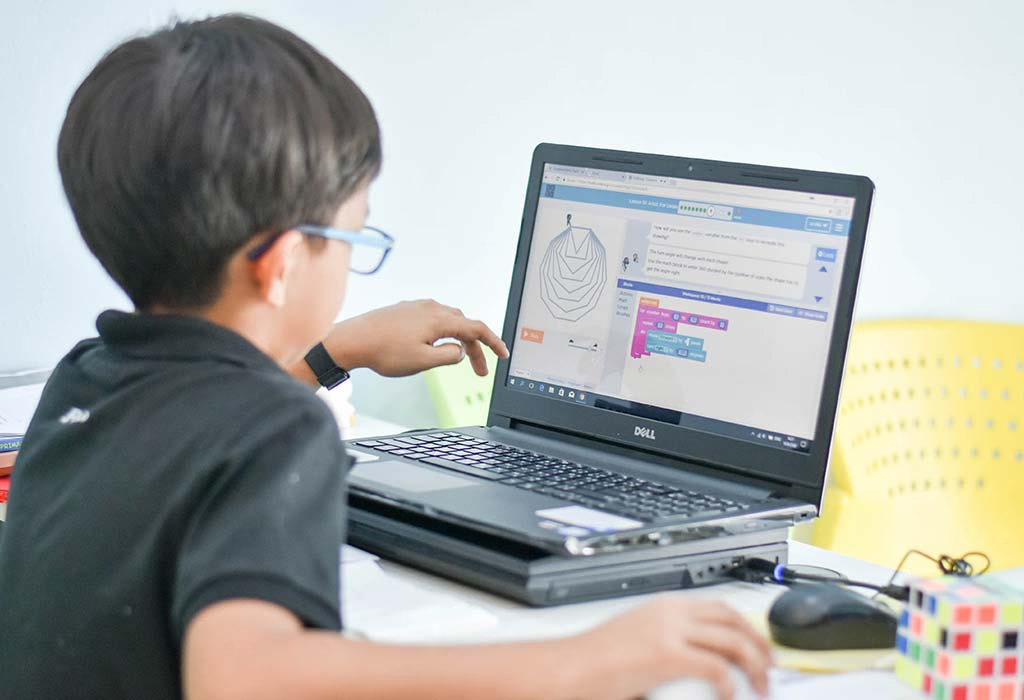
Scratch Programming for Young Beginners
Scratch provides an excellent starting point for younger children. Instead of typing complex commands, students connect visual coding blocks.
Children can create:
- Interactive stories
- Simple games
- Animations
- Quizzes
- Digital presentations
As children experiment, they learn programming concepts without worrying about complicated syntax.
What Happens During a Typical Coding Class?
A typical coding lesson combines explanation, demonstration, practice, and creativity.
First, the instructor introduces a specific concept. Next, children watch a practical demonstration.
Afterward, students try the concept themselves. The teacher provides guidance when students encounter problems.
A typical lesson may include:
- A short introduction to the topic.
- A practical coding demonstration.
- Guided student practice.
- An individual coding challenge.
- Project development.
- Testing and debugging.
- Sharing completed work.
This structure keeps children actively involved throughout the session.
Working on Individual and Group Projects
Some lessons involve individual projects. Others encourage children to collaborate.
Group projects can teach children how to communicate ideas and divide responsibilities.
For example, one student might design characters. Another could develop the game logic.
This approach combines coding skills for children with valuable teamwork abilities.
Coding Languages Children Can Learn
Children can learn different programming languages as they gain experience.
The right language depends on age, interests, and learning objectives.
Web Development with HTML and CSS
Older children can begin exploring web development using HTML and CSS.
HTML helps students structure web pages. CSS allows them to control layouts, colors, fonts, and visual presentation.
Children can eventually create simple personal websites and project pages.
Web development also gives students a visible result from their work. They can open their browser and immediately see their creation.
Progressing from Beginner to Advanced Coding
Children do not need to start with advanced programming languages.
A strong learning pathway begins with simple concepts. Students then progress toward more complex projects.
For example, a learning journey could include:
Visual coding → HTML and CSS → JavaScript → Advanced programming
The progression should match the child’s confidence and ability.
How Coding Classes Encourage Creativity
Coding is not only about computers and technical instructions. It also provides children with a powerful creative outlet.
Students can turn ideas into interactive experiences.
A child interested in storytelling can create an animated story. Another interested in games can design a playable adventure.
Coding allows children to ask, “What can I create?”
That mindset encourages experimentation and innovation.
Moreover, children learn that there can be several solutions to one problem. Therefore, they can develop their own approaches instead of copying a single answer.
Projects Kids Can Build in Coding Classes
Projects help children understand why programming matters.
Rather than completing endless exercises, students can apply their knowledge to real creations.
Building Simple Games and Animations
Game development is especially engaging for many children.
Students can create games featuring characters, points, levels, obstacles, and rewards.
They can also build animations with moving characters and interactive scenes.
Possible beginner projects include:
- Maze games
- Racing games
- Platform games
- Interactive stories
- Digital quizzes
- Animated presentations
- Simple educational games
These projects provide opportunities for children to practice programming repeatedly.
As their skills improve, projects can become more sophisticated.
Skills Children Develop Through Coding
The benefits of coding classes for kids extend beyond programming.
Coding encourages children to approach challenges systematically. They learn to break large problems into smaller tasks.
Developing Problem-Solving and Logical Thinking
Programming requires children to think carefully about cause and effect.
If something does not work, students investigate the problem. They check their code, identify mistakes, and test possible solutions.
This process develops logical thinking and persistence.
Children also discover that mistakes are part of learning. Instead of giving up immediately, they can debug and try again.
Other valuable skills include:
- Critical thinking
- Creativity
- Problem-solving
- Persistence
- Attention to detail
- Logical reasoning
- Collaboration
- Communication
- Digital confidence
These skills can support children across different academic subjects.
How to Choose the Right Coding Class for Your Child
Not every coding class offers the same learning experience.
Parents should consider several factors before choosing a program.
Choose an Age-Appropriate Curriculum
Young beginners need simple, engaging activities. Older students may benefit from more advanced programming projects.
Therefore, check whether the curriculum matches your child’s age and experience.
Look for Practical Projects
Children learn effectively when they can apply new concepts.
Ask whether students build games, websites, animations, applications, or other projects.
Project-based learning can make lessons more meaningful.
Check Class Size and Teacher Support
Children may need individual assistance while learning to code.
Smaller classes can provide more opportunities for questions and personalized guidance.
Also, consider whether instructors encourage experimentation rather than simply providing answers.
Consider the Learning Path
A good program should offer opportunities for progression.
Beginners should have a clear starting point. More experienced students should have opportunities to tackle increasingly challenging projects.
Parents can also ask about online and in-person learning options.
Why Coding Classes Matter for Children
Computer programming for kids provides more than technical knowledge.
It introduces children to a way of thinking that emphasizes creativity, experimentation, and problem-solving.
Furthermore, technology skills can become increasingly valuable as children progress through school and eventually enter the workforce.
Early exposure can also help children understand technology more confidently.
However, coding should remain enjoyable.
Children are more likely to stay interested when lessons allow them to create things they genuinely enjoy.
How Parents Can Support Coding at Home
Parents do not need programming experience to support their child’s learning.
Instead, encourage curiosity and celebrate completed projects.
Ask your child to explain what they created. You can also ask what problem they solved during the lesson.
Most importantly, avoid solving every coding problem for them.
Allowing children to troubleshoot encourages independence and persistence.
Parents can also encourage children to maintain a portfolio of their projects. Over time, this portfolio can demonstrate their growing abilities.
Give Your Child a Head Start With Coding
The best coding classes for children combine technical learning with creativity.
Children can start with simple games and visual programming. Then, they can progress toward websites, applications, games, and advanced programming.
Along the way, they develop problem-solving, logical thinking, creativity, collaboration, and persistence.
If you’re looking for structured coding classes for kids in Kenya, explore the programs available through Techkids Kenya. Children can develop practical technology skills through engaging, project-based learning.
Ready to help your child become a confident creator with technology? Contact Techkids Kenya today and explore the right coding program for your child.
Suggested Internal Linking Opportunities Offered By Techkids Kenya
For stronger website SEO, consider linking this article to related pages using descriptive anchor text:
- Coding Classes for Kids
- Scratch Programming for Kids
- Minecraft Coding Classes
- Roblox Game Development
- Web Design for Kids
- JavaScript Classes for Kids
- Game Development for Kids
- STEM Programming for Children
- Robotics Classes for Kids
Frequently Asked Questions About Kids Coding Classes
1. What age should a child start coding classes?
Children can begin coding at an early age through visual programming platforms.
Many beginner programs introduce coding concepts through games, animations, and interactive activities.
The ideal starting point depends on the child’s age, interests, and learning readiness.
2. What do kids learn in coding classes?
Children learn programming fundamentals, problem-solving, logical thinking, and debugging.
They may also learn specific technologies such as Scratch, HTML, CSS, JavaScript, or other programming languages.
Lessons often include practical projects that reinforce these concepts.
3. Are coding classes suitable for complete beginners?
Yes. Beginner-friendly coding lessons introduce programming concepts gradually.
Students can start with simple instructions and interactive activities.
They can then progress toward more challenging projects as their confidence increases.
4. Can coding classes improve problem-solving skills?
Yes. Coding requires students to identify problems and develop logical solutions.
Debugging also teaches children how to analyze mistakes and test alternatives.
Consequently, coding can encourage persistence and structured problem-solving.
5. What can children build after learning coding?
Children can create games, animations, websites, interactive stories, quizzes, and simple applications.
The projects depend on their age, programming experience, and chosen technology.
As their skills develop, students can tackle increasingly complex projects.
6. How can parents choose the best coding class for their child?
Parents should consider age suitability, teaching methods, class size, projects, instructor support, and progression opportunities.
A strong program should combine structured instruction with hands-on practice.
Most importantly, children should enjoy learning while developing useful technology skills.