Artificial intelligence is changing how children learn, create, communicate, and solve problems. Therefore, parents increasingly want practical technology education for their children. Through the blog you will be able to know more about AI classes for kids in kenya.
AI for kids Kenya programs introduce children to artificial intelligence through age-appropriate activities. These programs can combine coding, creativity, problem-solving, and technology.
However, children do not need advanced mathematics to begin exploring AI. Instead, they need curiosity, guidance, and engaging learning experiences.
From AI classes for kids in Kenya to practical coding projects, learning can start early. Consequently, children can develop valuable technology skills while having fun.
This guide explains what children can learn from AI education. It also explores safe learning methods and practical project ideas.
What Is AI for Kids in Kenya?
AI for kids introduces artificial intelligence concepts through simple, interactive learning activities. Lessons should match the child’s age, interests, and existing technology experience.
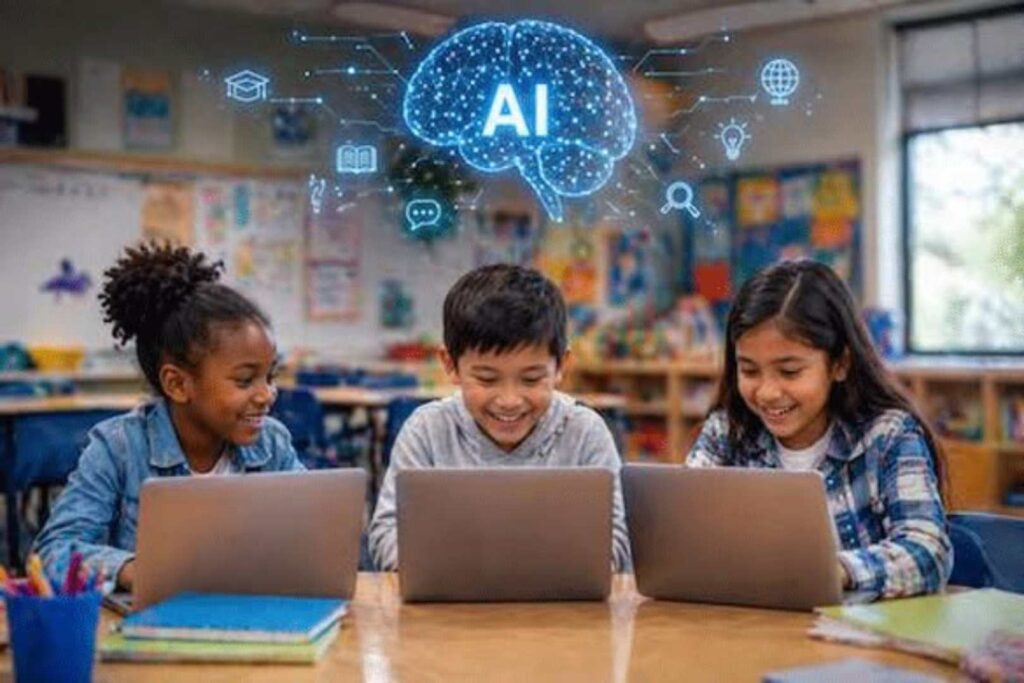


Understanding Artificial Intelligence Through Simple Examples
Children encounter AI in many everyday technologies. For example, recommendation systems suggest videos, music, and games.
Voice assistants can recognize spoken commands. Similarly, image recognition systems can identify objects within photographs.
Teachers can explain these concepts using games and demonstrations. This approach makes artificial intelligence easier for young learners to understand.
Artificial intelligence for kids Nairobi programs can introduce these concepts through practical activities. Children can explore AI without needing advanced technical knowledge.
Why Should Children Learn Artificial Intelligence?
AI education can help children understand technologies shaping their future. Moreover, it encourages them to become creators rather than passive technology users.
Children can develop several valuable skills, including:
- Logical thinking
- Problem-solving
- Creativity
- Computational thinking
- Digital literacy
- Communication
- Collaboration
- Critical thinking
AI learning also encourages experimentation. Therefore, children can learn by building, testing, making mistakes, and improving their projects.
How AI Helps Children Become Creative Problem Solvers
AI projects often require children to identify problems first. Next, they can design solutions using technology.
For instance, a child could create an interactive learning assistant. Another learner could design a simple image-recognition project.
Consequently, children learn that technology can solve real-world problems.
What Can Kids Learn in an AI Class?
The content depends on the child’s age and learning level. However, quality AI courses for children in Kenya can cover several foundational concepts.
Topics may include:
- Introduction to artificial intelligence
- Machine learning concepts
- AI ethics
- Basic programming
- Data and patterns
- Computer vision
- Chatbots
- AI-powered applications
- Robotics
- Creative AI projects
Introduction to Machine Learning for Young Learners
Machine learning allows computers to identify patterns from information. Children can understand this through simple examples.
For instance, students can train a basic system to recognize different categories. They can then test whether the system makes accurate predictions.
The activity teaches an important lesson about data. Specifically, better information can help systems produce better results.
How AI Education Develops Problem-Solving Skills
AI education encourages children to approach problems systematically. First, learners identify a challenge.
Next, they break the challenge into smaller parts. Then, they develop and test a possible solution.
If the solution fails, they investigate the problem. Finally, they improve their approach and test it again.
Building Simple AI-Powered Projects
Project-based learning can make AI concepts more memorable. Children can build simple projects based on their interests.
Possible projects include:
- Basic chatbots
- Image classification activities
- Voice-controlled applications
- AI storytelling tools
- Smart recommendation concepts
- Interactive quizzes
- Simple prediction projects
These projects can also connect classroom learning with everyday technology.
AI and Coding Classes for Kids in Nairobi
Coding provides an important foundation for practical AI education. Therefore, kids AI coding classes Nairobi programs can combine programming with artificial intelligence concepts.
Children can begin with visual programming platforms. Older learners can gradually explore text-based programming languages.
Combining AI With Coding and Robotics
Combining AI with coding can create exciting learning experiences. Robotics can make these lessons even more interactive.
For example, children can program robots to respond to specific inputs. They can then explore how AI could make those systems more adaptive.
This combination supports both technical and creative learning.
For parents searching for AI programming for kids Nairobi, project-based courses can provide practical exposure.
How Children Can Use AI Safely and Responsibly
AI education should include responsible technology use. Children need to understand that AI tools can make mistakes.
They should also learn about privacy and personal information. Additionally, children should understand that AI-generated information requires human review.
Teaching Children Responsible AI Use
Parents and teachers can establish simple AI rules at home and school.
Children should:
- Avoid sharing private information.
- Check AI-generated information.
- Ask adults when something seems confusing.
- Use AI for learning and creativity.
- Respect copyright and other people’s work.
- Avoid using AI to cheat.
- Think critically about AI responses.
These habits encourage responsible digital citizenship.
AI Projects Kids Can Build and Explore
Practical projects can turn abstract concepts into memorable experiences. Furthermore, projects give children opportunities to demonstrate creativity.
Here are several ideas for different learning levels:
Beginner project: Create a simple chatbot using visual programming.
Intermediate project: Build an image-classification activity.
Creative project: Develop an AI-assisted interactive story.
Robotics project: Program a robot to respond to different inputs.
Advanced project: Create a basic machine-learning application.
Fun AI Activities for Kids at Home and School
Parents can also introduce AI through simple activities. For example, children can identify AI-powered tools they use daily.
They can discuss how recommendation systems work. They can also compare human decisions with computer predictions.
Another activity involves sorting objects into categories. Children can then discuss how computers might learn those categories.
These activities require minimal equipment. Therefore, families can encourage AI curiosity outside formal classes.
How AI Skills Prepare Children for the Future
Technology continues to influence education and employment. Consequently, children can benefit from developing strong digital foundations early.
Future technology skills for kids Kenya programs can introduce children to concepts they may use later.
These skills include coding, AI literacy, robotics, data thinking, and digital creativity.
Preparing Kenyan Children for an AI-Driven Future
Kenyan children can benefit from practical technology education that reflects global trends. However, learning should remain relevant to local opportunities and challenges.
Students can explore projects related to education, agriculture, business, transportation, and environmental sustainability.
For example, learners could design an application that supports school revision. Another student could explore technology for agricultural decision-making.
Such projects show children how technology can address real problems.
How Parents Can Choose an AI Program for Children
Parents should consider several factors before selecting an AI program.
First, check whether lessons match the child’s age. Next, examine whether students receive practical project experience.
Also, consider the teaching approach. Interactive activities can make complex technology easier to understand.
Parents should also look for programs that teach responsible AI use. Furthermore, instructors should encourage questions and experimentation.
A useful AI program should balance technology knowledge with creativity.
Why Project-Based AI Learning Matters
Reading about artificial intelligence provides useful background knowledge. However, building projects creates opportunities for practical learning.
Children can experiment with ideas and observe results. They can also learn from mistakes without fearing failure.
Therefore, project-based learning can make AI education more engaging.
Parents can encourage children to maintain a digital project portfolio. This portfolio can showcase their progress and creativity over time.
AI Education and Other Technology Skills
AI should not exist separately from other technology skills. Instead, children can combine AI with coding, robotics, web development, and digital design.
This broader approach creates stronger technology foundations.
For example, coding teaches computational thinking. Robotics adds physical interaction.
Meanwhile, AI introduces pattern recognition and intelligent systems. Together, these areas create a richer learning experience.
A Practical Starting Point for Parents
Parents do not need to make AI complicated. Instead, start with everyday examples that children already understand.
Ask children where they encounter AI. Discuss how recommendation systems work.
Then introduce simple coding activities. Later, children can progress toward AI-powered projects.
Most importantly, encourage curiosity rather than memorization.
Conclusion
AI for kids Kenya programs can introduce children to an important area of modern technology. They can also develop creativity, problem-solving, and computational thinking.
Children can learn through coding, robotics, machine learning, and practical projects. Moreover, responsible AI education helps them understand technology’s opportunities and limitations.
For parents, the goal should be practical and age-appropriate learning. Children should have opportunities to explore, create, experiment, and solve problems.
With the right guidance, AI education can become an exciting part of a child’s technology journey.
Suggested CTA
Ready to introduce your child to artificial intelligence?
Explore practical coding and technology programs designed for young learners. Give your child opportunities to create, experiment, and develop future-ready technology skills.
Contact Techkids Kenya today to learn about available coding and AI learning opportunities.
Frequently Asked Questions About AI for Kids in Kenya
1. What is AI for kids in Kenya?
AI for kids in Kenya introduces children to artificial intelligence through age-appropriate activities. Lessons may include coding, machine learning, robotics, and creative projects.
2. At what age can children start learning AI?
Children can begin learning basic AI concepts at different ages. Younger learners can explore AI through games and visual activities.
Older students can progress toward coding and machine-learning projects.
3. Are there AI classes for kids in Kenya?
Yes, children can explore AI through technology and coding education programs. Available courses vary by provider, age group, curriculum, and learning format.
Parents should check the specific course content before enrolling.
4. What do kids learn in an AI course?
Children can learn basic artificial intelligence concepts, coding, machine learning, data patterns, and responsible AI use.
They may also build simple AI-powered projects.
5. Can children learn AI without knowing how to code?
Yes. Beginners can explore AI concepts without advanced programming knowledge.
However, coding can become increasingly useful as children progress toward practical AI projects.
6. Why should children learn artificial intelligence?
AI education can help children understand emerging technologies. It can also develop problem-solving, creativity, logical thinking, and computational skills.
Early exposure can help children become confident technology creators.
Internal linking opportunities for Techkids Kenya:
- Coding Classes for Kids in Nairobi
- Robotics Classes for Kids in Nairobi
- Programming Classes for Kids
- Scratch Programming for Kids
- Minecraft Coding Classes
- Technology Skills for Children
- Web Development for Kids
- STEM Education for Kids
Suggested SEO CTA:
Enroll your child in practical technology classes and help them build the skills needed for an AI-powered future.