Artificial intelligence is quickly becoming part of everyday life. Kenyan children already interact with AI through apps, games, search engines, and smart devices. Through the blog you will be able to know AI Education for Kids in Kenya.
However, using AI and understanding AI are two different things. Children need guidance to become confident and responsible technology users.
AI for kids in Kenya introduces children to artificial intelligence through age-appropriate learning activities. It combines creativity, coding, problem-solving, and digital skills.
For parents, early exposure can prepare children for a technology-driven future. Therefore, AI education should focus on curiosity rather than complicated technical concepts.
What Is Artificial Intelligence for Kids?
Artificial intelligence allows computers to perform tasks that normally require human intelligence. These tasks include learning, recognizing patterns, understanding language, and making predictions.
For children, AI can be explained using simple examples. Voice assistants, recommendation systems, chatbots, and image recognition are useful examples.


Understanding AI Through Simple Examples
Children can learn AI through familiar technologies. For example, YouTube recommendations demonstrate how systems suggest content.
Similarly, facial recognition can demonstrate how computers identify patterns. Voice assistants show how machines process spoken language.
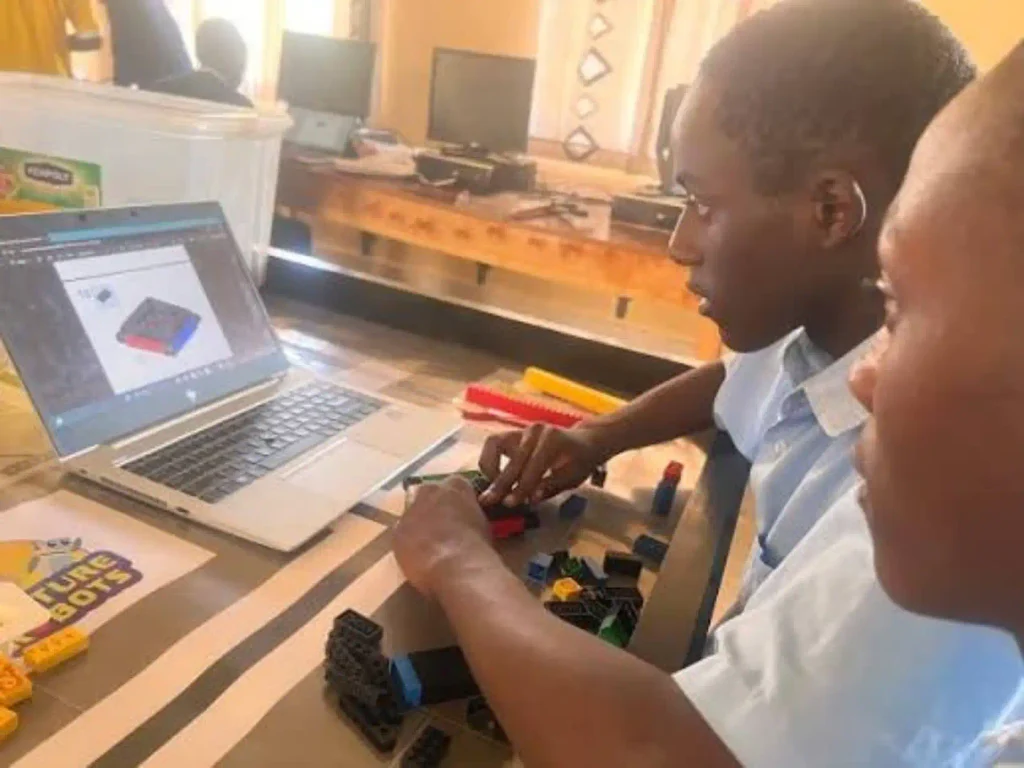
Teachers can turn these examples into fun classroom activities. This approach makes artificial intelligence for children easier to understand.
AI education for kids should remain practical and interactive. Children learn better when they experiment and ask questions.
Why Should Kenyan Children Learn About AI?
AI is transforming education, business, healthcare, agriculture, transport, and communication. Kenya is also developing a growing technology ecosystem.
Therefore, children should understand the technology shaping their future.
Early AI education can help children develop useful skills before entering higher education. It can also make technology less intimidating.
More importantly, children can learn to become creators instead of passive technology consumers.
AI and the Future of Education in Kenya
Technology is changing how students research, communicate, and complete assignments. AI tools can support learning when used appropriately.
However, children still need strong foundational knowledge. AI should support learning rather than replace independent thinking.
Schools and technology programs can introduce AI alongside coding, robotics, mathematics, and science.
This creates a stronger foundation for future technology careers.
How AI Can Benefit Children’s Education
AI learning for children can provide several educational benefits.
First, it encourages children to explore new ideas. Second, it helps them understand how technology works.
AI activities can also develop analytical thinking. Children learn to identify patterns, test ideas, and evaluate results.
Other benefits include:
- Improved problem-solving abilities
- Stronger logical thinking
- Increased digital confidence
- Greater creativity
- Better technology awareness
- Practical STEM exposure
- Early programming experience
- Stronger research skills
How AI Encourages Creativity and Problem-Solving
AI projects can give children opportunities to solve real problems. They might create a simple chatbot or design an intelligent game.
For example, children can build projects that classify objects or recognize simple patterns.
Such activities encourage experimentation. Consequently, children learn that mistakes can become part of the learning process.
What Can Kids Learn From AI Classes?
AI classes for kids in Kenya can cover different topics based on age and experience.
Younger learners can explore basic AI concepts through games and visual activities. Older children can explore machine learning, data, automation, and programming.
A well-designed program may introduce:
- Basic artificial intelligence concepts
- Machine learning fundamentals
- Pattern recognition
- Chatbots and conversational AI
- Computer vision concepts
- AI-powered creative projects
- Data and algorithms
- Responsible AI use
- Coding for AI applications
- Practical technology projects
Age-Appropriate AI Activities for Kids
Younger children can identify patterns using pictures, shapes, and colors. They can also explore simple decision-making games.
Older learners can create basic AI-powered applications. They can experiment with datasets and simple machine-learning concepts.
Teenagers may explore Python, algorithms, data analysis, and more advanced AI projects.
The right difficulty level keeps children challenged without overwhelming them.
AI Skills Children Can Develop at a Young Age
AI education develops more than technical knowledge. Children also build transferable skills.
These include:
- Critical thinking
- Creativity
- Collaboration
- Communication
- Logical reasoning
- Problem-solving
- Digital literacy
- Research skills
- Computational thinking
Important Digital Skills Children Need for the Future
Future-ready children need both technical and human skills. Coding, data literacy, cybersecurity awareness, and digital communication are increasingly valuable.
However, creativity and ethical decision-making remain equally important.
Children should also learn how to question information generated by technology. They need to understand that AI systems can produce inaccurate results.
This balanced approach creates responsible technology users.
How Parents Can Introduce AI to Their Children
Parents do not need advanced technical knowledge to introduce AI. Simple conversations can provide an excellent starting point.
Ask children where they encounter smart technology. Discuss how search engines recommend information.
You can also explore age-appropriate AI games and educational tools together.
Encourage children to ask questions such as:
- How does this technology work?
- What information does it use?
- Can the computer make mistakes?
- Who created the system?
- How should we use it responsibly?
These conversations develop curiosity and digital awareness.
Is AI Safe and Appropriate for Children?
AI can be appropriate for children when adults provide suitable guidance. Parents should select age-appropriate tools and supervised learning environments.
Children should never share sensitive personal information with AI systems. They should also understand that AI-generated information can contain errors.
Using AI Tools Responsibly and Safely
Parents can establish simple rules for AI use.
For example, children should avoid sharing passwords, home addresses, private photographs, or other sensitive information.
They should also verify important information with trusted sources.
Furthermore, children should use AI to support learning rather than copy answers blindly.
Responsible AI education teaches children both technological skills and digital judgment.
AI, Coding, Robotics and STEM Education
AI works particularly well alongside coding and robotics. These subjects help children understand how technology operates.
Coding teaches children how to give instructions to computers. Robotics shows how software can control physical systems.
AI adds another layer by introducing machines that can identify patterns and make predictions.
Together, these subjects create a practical STEM learning experience.
For example, a child could program a robot and then explore how sensors help it respond to its environment.
This approach makes kids technology education in Kenya more engaging and practical.
How to Choose the Best AI Program for Kids in Kenya
Parents should evaluate several factors before selecting an AI program.
First, consider the child’s age and existing technology experience. The program should provide suitable challenges.
Second, examine the learning approach. Practical projects usually provide stronger engagement than theory alone.
Third, check whether instructors understand children’s learning needs.
What Parents Should Look for in an AI Kids Program
A quality program should include:
- Age-appropriate lessons
- Practical AI projects
- Experienced instructors
- Small learning groups where possible
- Coding and STEM integration
- Safe technology practices
- Creative problem-solving activities
- Progress tracking
- Opportunities to build projects
Parents should also ask whether children create something during the program.
Project-based learning gives children a chance to apply their knowledge. It also helps parents see what their children have learned.
Artificial Intelligence Courses for Children in Kenya
Artificial intelligence courses for children can range from beginner programs to advanced technology classes.
Beginners can start with visual tools and simple experiments. Intermediate learners can combine AI with coding.
Advanced students can explore programming languages and machine-learning concepts.
The goal should not be to turn every child into an AI engineer.
Instead, AI programs should help children understand technology, solve problems, and build confidence.
The Role of Parents in AI Learning
Parents play an important role in creating positive technology habits.
Encourage children to explain what they are learning. Celebrate their projects and ask about their ideas.
Also, balance screen-based learning with physical activities and social interaction.
Technology should become one part of a child’s development rather than the entire experience.
AI Education and Future Skills for Kenyan Children
The future workplace will continue to change as technology develops. Therefore, children need adaptable skills.
Future skills for Kenyan children include digital literacy, creativity, communication, critical thinking, and problem-solving.
AI education can introduce these abilities early.
However, technology education should always remain human-centered. Children need to understand both what AI can do and where human judgment matters.
Why AI Education Matters for Kenya
Kenya has a growing technology sector and an increasingly digital economy. Young people will participate in industries influenced by artificial intelligence.
Early education can help children become more confident with emerging technologies.
It can also encourage innovation and entrepreneurship.
Most importantly, children can begin imagining themselves as future creators, developers, engineers, researchers, and technology entrepreneurs.
Start Your Child’s AI Learning Journey
AI education gives children an opportunity to explore technology through creativity and practical learning.
Whether your child is interested in coding, robotics, games, or technology, AI can provide exciting new challenges.
At Techkids Kenya, parents can explore technology-focused learning opportunities designed for children and teenagers.
Consider linking this article internally to your Coding Classes for Kids, Robotics Classes for Kids, STEM Education, and Programming Classes for Kids pages.
Ready to introduce your child to future-focused technology skills? Explore Techkids Kenya programs and help your child turn curiosity into practical skills.
Frequently Asked Questions About AI for Kids in Kenya
1. What is AI for kids in Kenya?
AI for kids in Kenya teaches children basic artificial intelligence concepts through age-appropriate activities.
Children can explore AI through coding, games, robotics, creative projects, and practical experiments.
2. At what age can children start learning AI?
Children can start exploring basic AI concepts from around six years old.
The teaching method should match their age and learning ability.
Younger children need simple activities, while teenagers can explore advanced programming.
3. What do children learn in AI classes?
Children can learn machine-learning concepts, pattern recognition, algorithms, chatbots, coding, and responsible AI use.
Programs may also include robotics and other STEM activities.
4. Are AI classes safe for children?
AI classes can be safe when instructors use age-appropriate tools and proper supervision.
Children should also learn about privacy, responsible technology use, and information verification.
5. Can AI help children with school learning?
AI can support research, brainstorming, explanations, and personalized learning activities.
However, children should still complete their own thinking and verify important information.
6. How can parents choose AI classes for kids in Kenya?
Parents should consider age suitability, instructor experience, practical projects, class size, and safety policies.
They should also choose programs that encourage creativity and independent problem-solving.
Conclusion
AI is becoming an important part of modern life. Kenyan children can benefit from understanding this technology early.
The best AI education for kids goes beyond teaching technical concepts. It develops curiosity, creativity, critical thinking, and responsible digital habits.
With the right guidance, children can use technology confidently and creatively.
AI learning can therefore become an important part of preparing Kenya’s next generation for a changing digital world.