Coding is no longer a skill reserved for software developers. Today, it is an essential learning tool that helps children improve academic performance while preparing for a technology-driven future. As schools continue integrating digital learning, coding equips students with valuable problem-solving abilities, logical thinking, creativity, and confidence. In the blog you will be able to know how coding helps children perform better in school.
Moreover, coding supports learning across multiple subjects. It strengthens mathematics, science, language, and even teamwork. Therefore, children who learn coding often perform better in school because they develop skills that apply far beyond computer programming.
Whether your child is just beginning or already interested in technology, enrolling them in coding classes for kids provides lifelong advantages. Furthermore, coding builds a strong foundation for success both inside and outside the classroom.
Why Coding Is More Than Just Learning to Program
Many parents believe coding simply teaches children how to write computer programs. However, coding develops much broader life and academic skills.
Children learn how to:
- Think logically
- Break complex tasks into smaller steps
- Analyze problems carefully
- Test different solutions
- Learn from mistakes
- Build confidence through practice
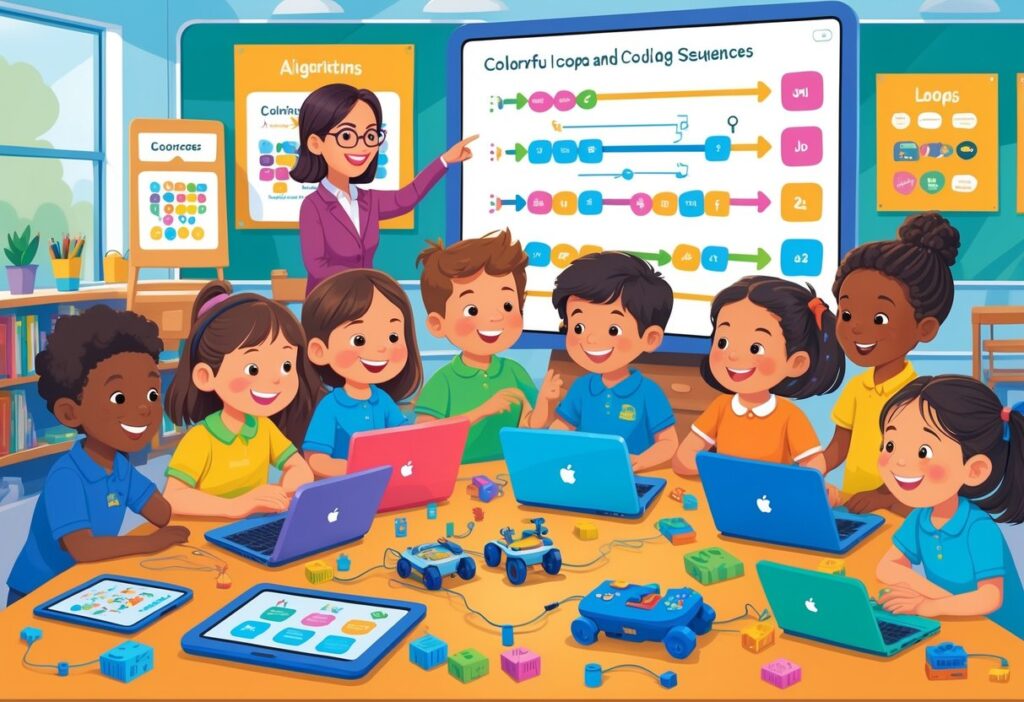
As a result, coding education in Kenya and across the world is becoming an important part of modern learning. Schools increasingly recognize coding as a valuable addition to traditional education because it encourages curiosity and independent thinking. Book your kid’s session today with us Techkids Kenya.

How Coding Improves Critical Thinking Skills
Critical thinking allows children to evaluate information before making decisions. Coding naturally strengthens this ability because every program requires careful planning and logical sequencing.
Instead of memorizing answers, students learn to ask questions, experiment with ideas, and improve their work continuously.
How Coding Strengthens Mathematics Skills
Coding introduces mathematical concepts in practical ways.
Children regularly use:
- Patterns
- Sequences
- Coordinates
- Variables
- Measurements
- Geometry
Consequently, mathematics becomes more enjoyable because students can immediately see how numbers solve real-world problems.
The Role of Coding in Improving Logical Reasoning
Every coding challenge requires logical thinking.
Students learn to:
- Identify a problem.
- Analyze possible solutions.
- Test each solution.
- Fix mistakes.
- Improve results.
Therefore, programming skills for students strengthen reasoning abilities that benefit every academic subject.
The Connection Between Coding and Better Academic Performance
Research consistently shows that coding supports overall learning.
Students who participate in coding programs often demonstrate improvements in:
- Mathematics
- Science
- Reading comprehension
- Writing organization
- Classroom participation
- Independent learning
Additionally, coding teaches children how to organize information clearly. Consequently, they perform better on assignments requiring structured thinking.
Building Confidence Through Coding Projects
Every completed coding project gives children a sense of achievement.
Instead of fearing mistakes, they begin viewing challenges as opportunities to improve. This growth mindset positively influences school performance because students become more willing to participate and tackle difficult subjects. In the blog you will be able to know how coding helps children perform better in school.
Coding Helps Children Build Strong Problem-Solving Skills
Problem-solving remains one of the most valuable skills in education and future employment.
Fortunately, coding places problem-solving at the center of every lesson.
Children repeatedly learn how to:
- Identify issues
- Analyze possible causes
- Design solutions
- Test ideas
- Improve outcomes
Therefore, coding improves problem-solving in ways that transfer directly into mathematics, science, and everyday decision-making.
Coding Encourages Teamwork and Collaboration
Modern coding projects often involve teamwork.
Children collaborate by:
- Sharing ideas
- Reviewing each other’s work
- Solving problems together
- Communicating clearly
- Respecting different viewpoints
These collaboration skills help students perform better during group assignments and classroom discussions. In the blog you will be able to know how coding helps children perform better in school.
How Programming Boosts Creativity and Innovation
Coding combines technical knowledge with creativity.
Instead of simply consuming technology, children begin creating it.
Students can build:
- Games
- Animations
- Websites
- Mobile apps
- Interactive stories
- Robotics projects
Consequently, coding encourages imagination while strengthening practical digital skills.
Creative thinking also improves writing, art, design, and project-based learning across the curriculum. In the blog you will be able to know how coding helps children perform better in school.
The Impact of Coding on Science and Technology Learning
Science increasingly depends on technology.
Coding helps children understand:
- Robotics
- Artificial intelligence
- Automation
- Data analysis
- Engineering concepts
- Digital systems
Therefore, STEM education for children becomes more engaging and practical when coding is included.
Coding Develops Focus, Patience, and Persistence
Coding teaches children that success rarely happens immediately.
Programs often require multiple attempts before working correctly.
Instead of becoming discouraged, children learn to:
- Stay focused
- Work patiently
- Keep improving
- Learn from errors
- Celebrate progress
These habits significantly improve classroom performance because students become more resilient during difficult assignments.
How Coding Enhances Memory and Concentration
Coding exercises require students to remember instructions, organize sequences, and monitor several tasks simultaneously.
As a result, children naturally strengthen:
- Short-term memory
- Working memory
- Attention span
- Concentration
- Information processing
These improvements contribute to better learning outcomes throughout school.
Why Coding Prepares Children for Future Careers
The future workplace increasingly depends on technology.
Even careers outside software development require strong digital skills.
Learning coding helps children prepare for fields such as:
- Software development
- Engineering
- Medicine
- Architecture
- Finance
- Cybersecurity
- Data science
- Artificial intelligence
- Digital marketing
- Robotics
Furthermore, employers value employees who demonstrate critical thinking, creativity, and adaptability.
By learning coding early, children gain a competitive advantage while building confidence for tomorrow’s careers.
How Parents Can Help Children Start Learning Coding
Parents play a vital role in encouraging coding education.
You can support your child by:
- Choosing age-appropriate coding classes.
- Encouraging project-based learning.
- Celebrating progress rather than perfection.
- Providing regular practice opportunities.
- Exploring educational coding games.
- Participating in coding activities together.
Most importantly, create a positive environment where curiosity is encouraged.
Best Age for Children to Start Learning Coding
Many experts recommend introducing coding between ages 6 and 8.
However, children of all ages can successfully learn programming using age-appropriate platforms.
Young learners often begin with visual programming languages before progressing to text-based programming as they mature.
Choosing the Right Coding Course for Your Child
Selecting the right course depends on your child’s:
- Age
- Learning style
- Interests
- Experience level
- Long-term goals
Look for programs that emphasize practical projects, creativity, and problem-solving rather than memorization alone.
A quality coding course should also encourage collaboration while developing computational thinking for kids through hands-on activities.
Why Coding Education Is Growing in Kenya
Technology continues transforming education throughout Kenya.
Consequently, many schools and learning centers now offer coding programs to help children develop essential digital skills.
Parents increasingly recognize that coding education in Kenya prepares students for both academic success and future employment opportunities.
Additionally, coding supports national goals of increasing innovation, entrepreneurship, and technology literacy among young learners.
As digital transformation accelerates, coding will become as important as mathematics, science, and language studies.
Internal Linking Opportunities Offered By Techkids Kenya
Consider linking this article to related resources such as:
- Best Educational Apps for Kenyan Students
- Why Every Child Should Learn Coding
- Coding Classes for Kids in Kenya
- Beginner Programming Courses for Children
- STEM Education Programs for Young Learners
- Robotics Classes for Kids
Call to Action
Give your child the skills needed to succeed in today’s digital world.
Enroll them in professional coding classes for kids and help them build confidence, creativity, critical thinking, and academic excellence. The earlier children begin learning coding, the stronger their foundation becomes for school success and future careers.
Frequently Asked Questions (FAQs)
1. How does coding help children perform better in school?
Coding strengthens logical thinking, problem-solving, creativity, focus, and organization. These skills improve performance in mathematics, science, reading, writing, and classroom activities.
2. At what age should children start learning coding?
Many children can begin learning basic coding concepts between ages 6 and 8. However, age-appropriate coding programs exist for younger and older learners.
3. Does coding improve mathematics skills?
Yes. Coding regularly uses numbers, patterns, sequencing, geometry, and logical reasoning. Therefore, it helps children understand mathematical concepts more effectively.
4. Why is coding important for STEM education?
Coding connects science, technology, engineering, and mathematics through practical projects. As a result, students better understand how these subjects work together in real-world applications.
5. Can coding improve problem-solving skills?
Absolutely. Coding teaches children to analyze problems, test solutions, fix errors, and think critically. These abilities transfer to both academics and everyday life.
6. Are coding classes beneficial for children in Kenya?
Yes. Coding classes help Kenyan students develop digital literacy, computational thinking, creativity, and career-ready skills. These competencies prepare them for success in school and an increasingly technology-driven economy.